SaMD vs. Non-Regulated Health Software

Andrey Tatarenko
CEO of 26bitz

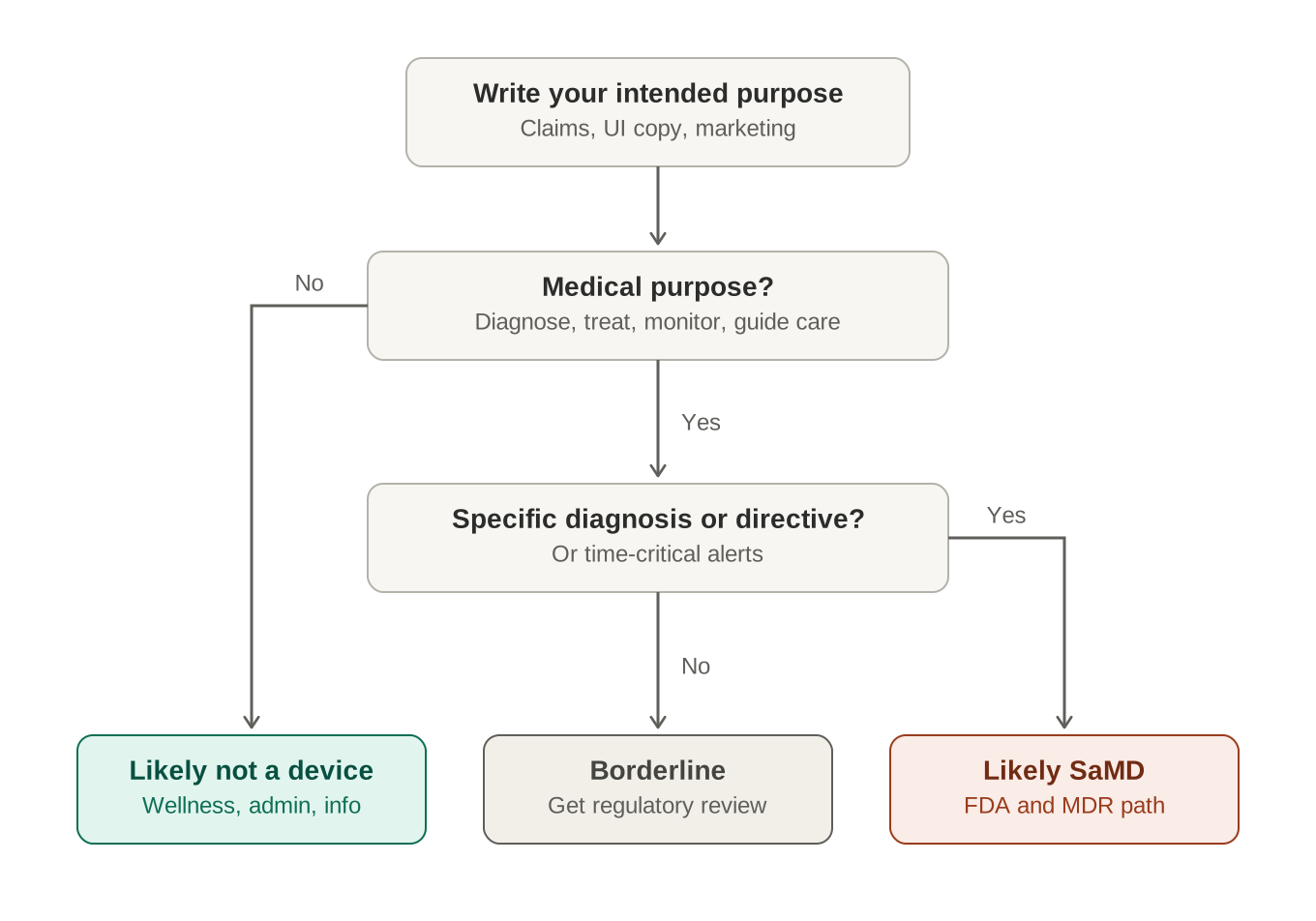
Software counts as a medical device when you intend it to diagnose, treat, monitor, or guide decisions about a medical condition. General wellness, admin, and plain health information tools usually don't. What decides it is your intended purpose, not how complex or risky the code is. Under the EU's guidance, qualification rests on intended purpose alone.
Side by side
Five quick examples
- A sleep tracker that charts your night and offers lifestyle tips: typically wellness, not a device.
- An app that analyzes skin photos and flags possible melanoma: SaMD.
- Clinic scheduling and billing software: not a device.
- A calculator that recommends an insulin dose: SaMD.
- A symptom checker that says "you may have X": very likely SaMD.
Borderline cases exist, and wording in your marketing and UI can move a product across the line.
What changed recently
- US: On January 6, 2026, FDA replaced its general wellness and clinical decision support guidances. Wearables that estimate things like blood pressure or glucose may now count as general wellness products, if the output is only for wellness, the outputs that resemble clinical values are validated, and nothing names a disease or sets clinical thresholds. Software that alerts clinicians to possible stroke, sepsis, or patient deterioration is still treated as a device.
- EU: MDCG 2019-11 Rev.1 (June 2025) is the current software classification guidance. The Commission proposed changes to Rule 11 in December 2025, but that is a draft. Manufacturers should keep classifying under the current rule.
How to decide, in four steps
- Write your intended purpose in one sentence.
- Check every claim in your UI, onboarding, and marketing against it.
- Map it to FDA and, if you sell in Europe, MDR Rule 11.
- Get a regulatory review before you build, not after. Deciding late means retrofitting a quality system and evidence onto software that already exists.
If you're building something that lands on the regulated side, see how we approach SaMD development.
Last reviewed: October 2026. This is general information, not regulatory or legal advice.
FAQs
Software that performs a medical purpose, such as diagnosing, monitoring, or guiding treatment, without being part of a hardware medical device.
Usually not, if it sticks to general wellness claims. Once it diagnoses, names a condition, or sets clinical thresholds, it may be.
Yes, but adding those features changes your intended purpose. Plan the quality system and evidence before you add them.
Device law doesn't apply, but privacy, security, and advertising rules still can.
Stay Updated with 26bitz
Subscribe to our newsletter for the latest insights, updates, and news from 26bitz.

Insights on Healthcare Tech
Exploring Innovations in Healthcare Technology

SaMD vs. Non-Regulated Health Software

Designing Brain Health Software That Actually Helps: Where Clinical Insight Meets Thoughtful UX

B2B Wellness Software: Boost Performance and Reduce Burnout

How Gen Z Is Changing Mental Health Care
Future-Proof Your Healthcare Software
Contact us to design solutions that grow with you secure, smart, and patient-focused.
